
Journal · baby
Choosing a Car Seat: 7 Checks Before You Buy
Nadia Shah · · 1 min read
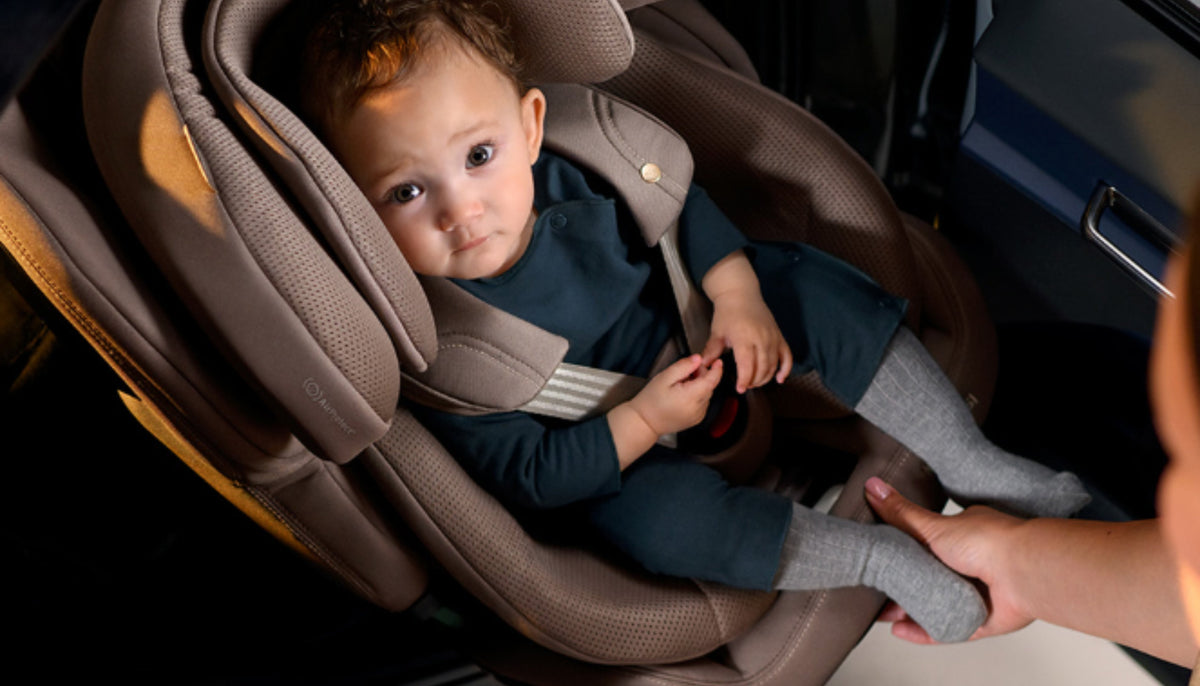
Start with the label. Car seats in the UK carry one of two approvals: i-Size, also called R129, which is the newer one, or R44.
1. Height range
Measure your child, then check the range on the label: a seat for 40 to 105cm covers birth to around four years, while 100 to 150cm is a high-back booster for older children.
2. What i-Size adds
R44 seats are grouped by your child's weight. i-Size seats go by height, are side impact tested, and keep children rear-facing until at least 15 months.
3. Your car
Look for ISOFIX points in your back seats, usually small metal bars tucked into the gap between the seat cushion and the backrest, then check the seat maker's vehicle fit list for your make and model. Some seats don't suit cars with sloping rear seats or limited headroom.
4. Fitting
An ISOFIX base clicks onto those bars, and many show a green indicator once they're secure. If you'll be lifting a baby in and out several times a day, a rotating seat that turns to face the open door saves a lot of twisting.
5. Infant carrier or all-stages
An infant carrier clips onto many pushchairs and is easy to carry with a sleeping baby inside, but it's outgrown in about a year. But an all-stages seat stays in the car and grows with your child, in some cases up to 12 years, which means one purchase instead of two or three.
6. Price
Whatever it costs, an approved seat has passed the crash tests for its regulation, so a higher price usually pays for features: rotation, a longer lifespan, more recline positions, a lighter frame or a cover that comes off for the washing machine.
7. Second-hand car seats
We love preloved, but car seats are the one thing to be cautious with. Only buy a used seat from someone you trust, when you know it has never been in a collision, it comes with its instructions and every part is there.
Seats to look at
- bebeconfort Atlas 360 i-Size, £179. For 40 to 150cm, rotates 360 degrees, fits with ISOFIX.
- Graco Turn2Me Grow i-Size R129, £160. For 40 to 125cm, rotates 360 degrees, rear-facing up to 75cm and a high-back booster from 100cm.
- Cosatto Acorn All Stages i-Size 360, £161.95. Rear-facing from 40 to 105cm and grows with your child to around 12 years. It needs the Acorn 2 rotating base, sold separately.


